When Charles Rennie Mackintosh came into contact with the Vienna Secession at the beginning of 1900, one of the most fertile and consequential cultural connections within the European Art Nouveau movement began to take shape.
Encounters with figures such as Josef Hoffmann, Koloman Moser, and the patron Fritz Waerndorfer led to an intensive exchange that shaped Mackintosh’s work as much as it did that of the Viennese designers and their students. The broad gesso panels designed by Mackintosh and Margaret MacDonald, which were presented at the Eighth Secession Exhibition, also influenced Gustav Klimt’s work and found their echo in the Beethoven Frieze of the Fourteenth Secession Exhibition.
In the summer of 1900, Mackintosh sent, among other materials, photographs of his own apartment to the painter Carl Moll, President of the Vienna Secession. These were published in 1901, together with views of Mackintosh’s Secession Room, in the Secessionist journal Ver Sacrum, where they made a lasting impression. The precise command of spatial composition, the reduction of furniture, and the consistent integration of architecture, furnishings, and ornamentation were new to many Viennese designers. Mackintosh’s works were regarded as exceptionally modern and acted as a catalyst: numerous Viennese designers and students would take up his designs in the following years, adapting, varying, and further developing them.
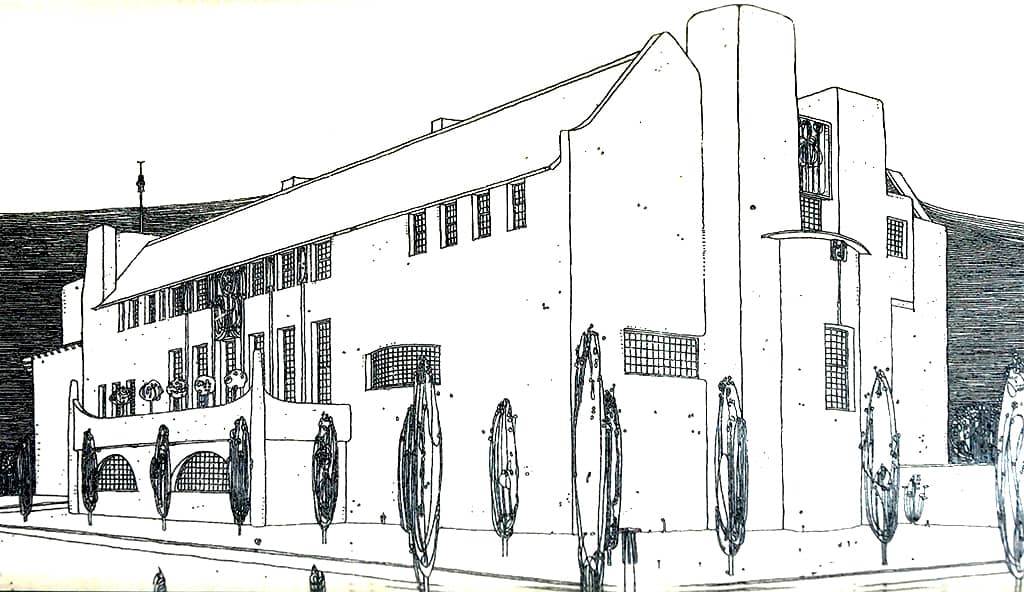
It was within this very context that Mackintosh also learned, during his visit to Vienna (October to December 1900), of a competition announced in December 1900 in the German journal Innendekoration. Edited by Alexander Koch in Darmstadt, the competition sought designs for a “House for an Art Lover.” The submission deadline was 25 March 1901.
Mackintosh submitted his design for the House for an Art Lover but was initially disqualified because he had not provided the required number of interior perspectives. Nevertheless, the quality of his drawings, combined with the modernity of his vision, earned him a special prize of 600 marks—a remarkable distinction, particularly as no first prize was awarded.
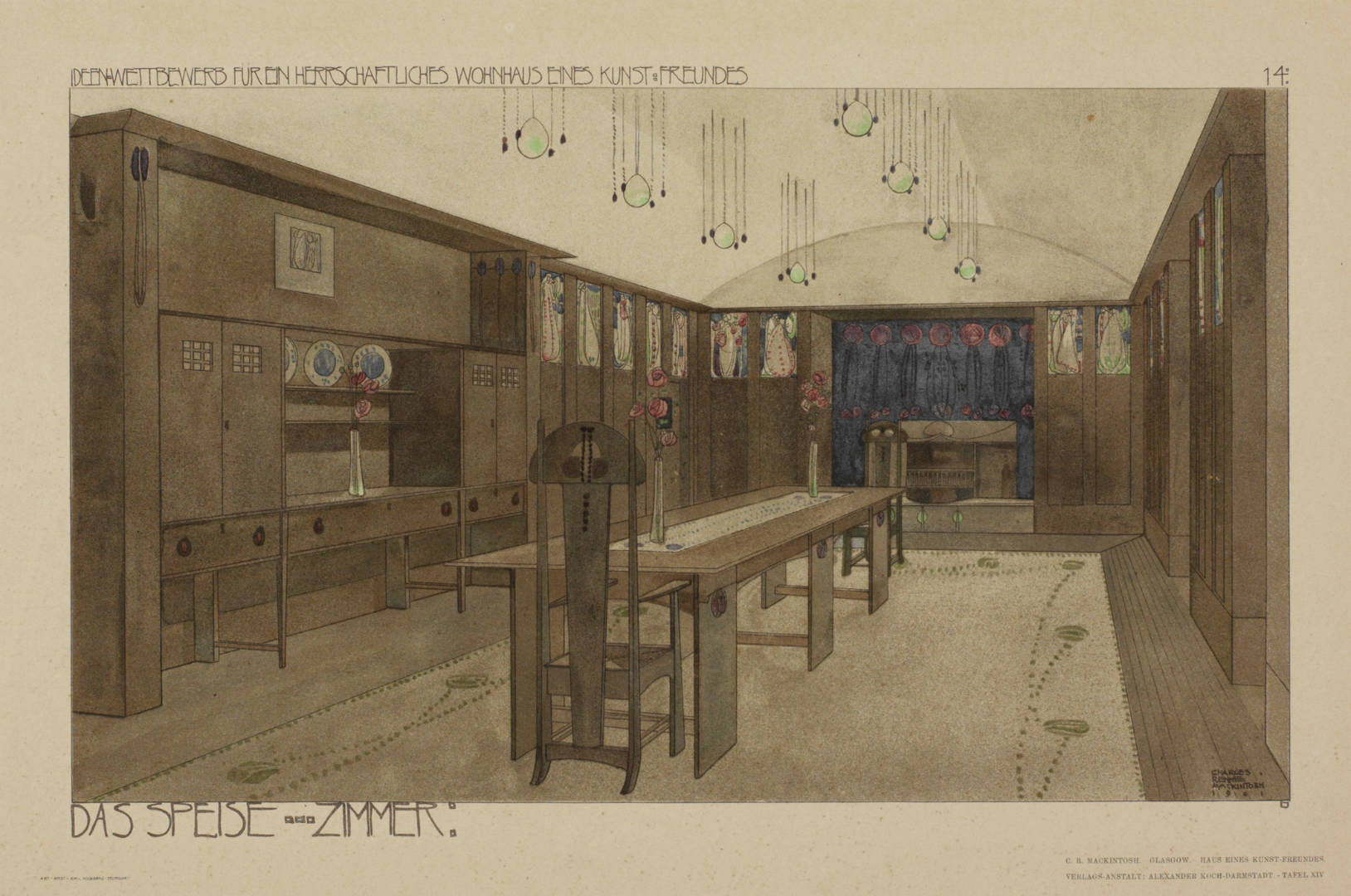
Alexander Koch published selected competition entries as independent portfolios. In 1902, he also published Mackintosh’s designs—including the completed interior perspectives—under the title Meister der Innenkunst (Masters of Interior Design). Through Koch’s journals, these works reached an audience throughout Europe as well as in the United States.
In this way, Mackintosh’s visionary concept of space and furniture became known to an international audience, even though the house itself was never realized.
The original drawings are believed to have been lost in 1944, when Alexander Koch’s publishing house was destroyed during a British air raid.
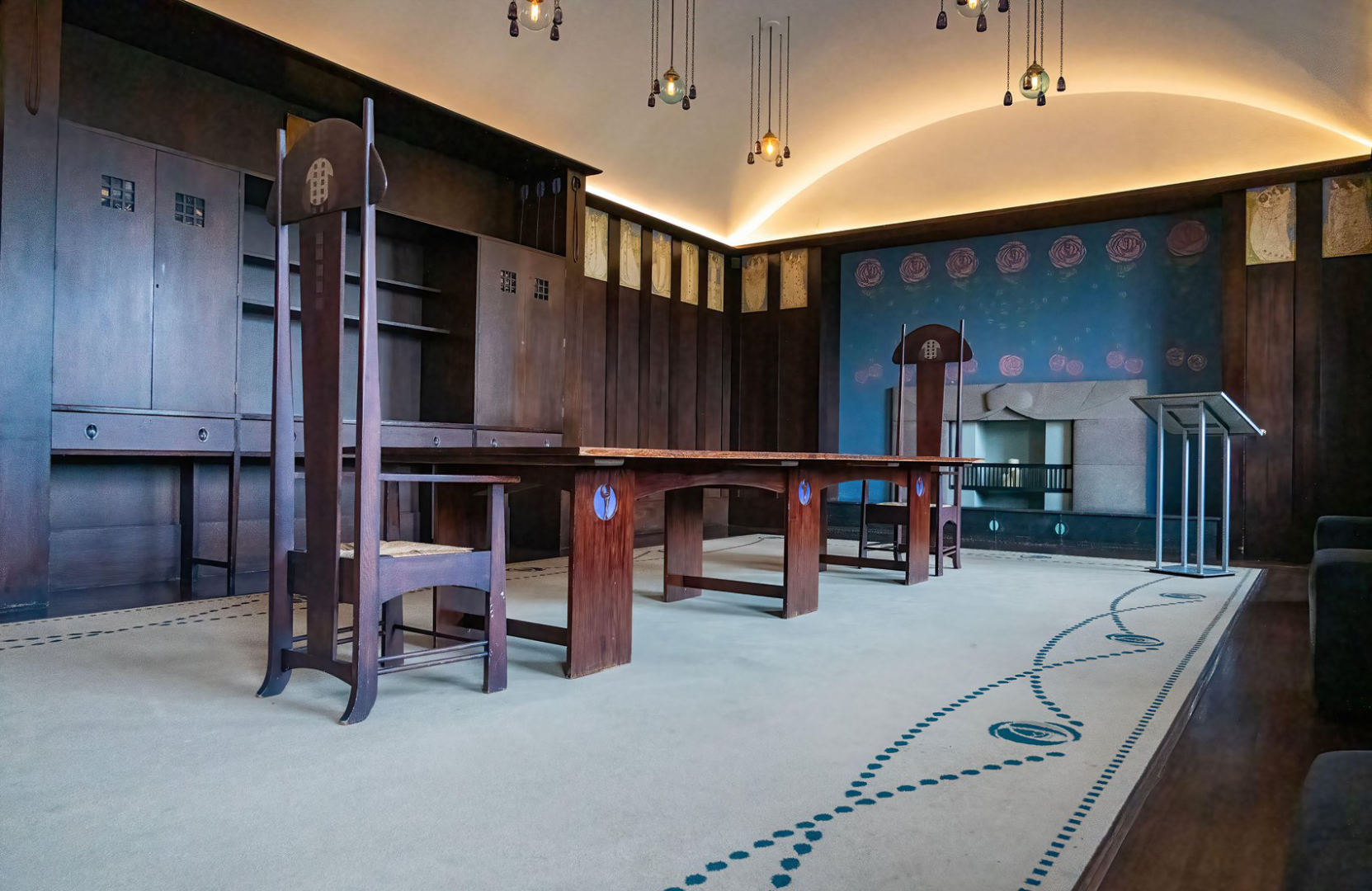
Particular attention should be given to the dining room of the House for an Art Lover. In contrast to the opulent reception room and music room, it is conceived as darker, calmer, and more restrained. Dark, panelled walls and furniture are balanced by a white vaulted ceiling, fifteen plaster panels, and a light-coloured carpet. The walls and cabinets are fitted with stencilled panels—one of Mackintosh’s central design devices, combining geometric rigor with ornamental delicacy.
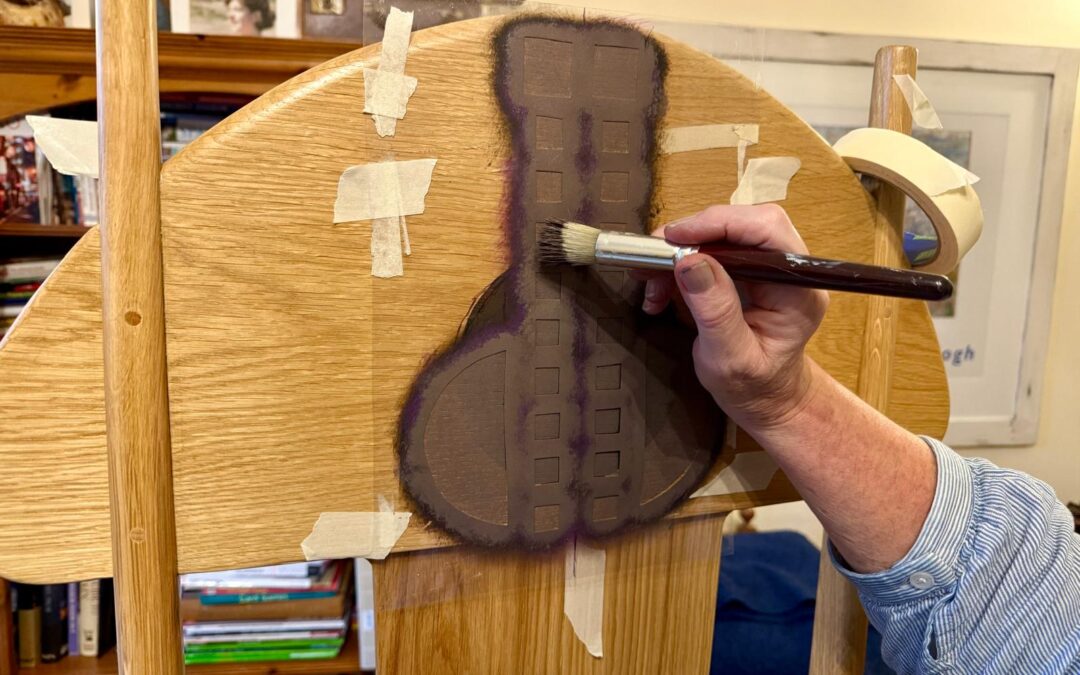
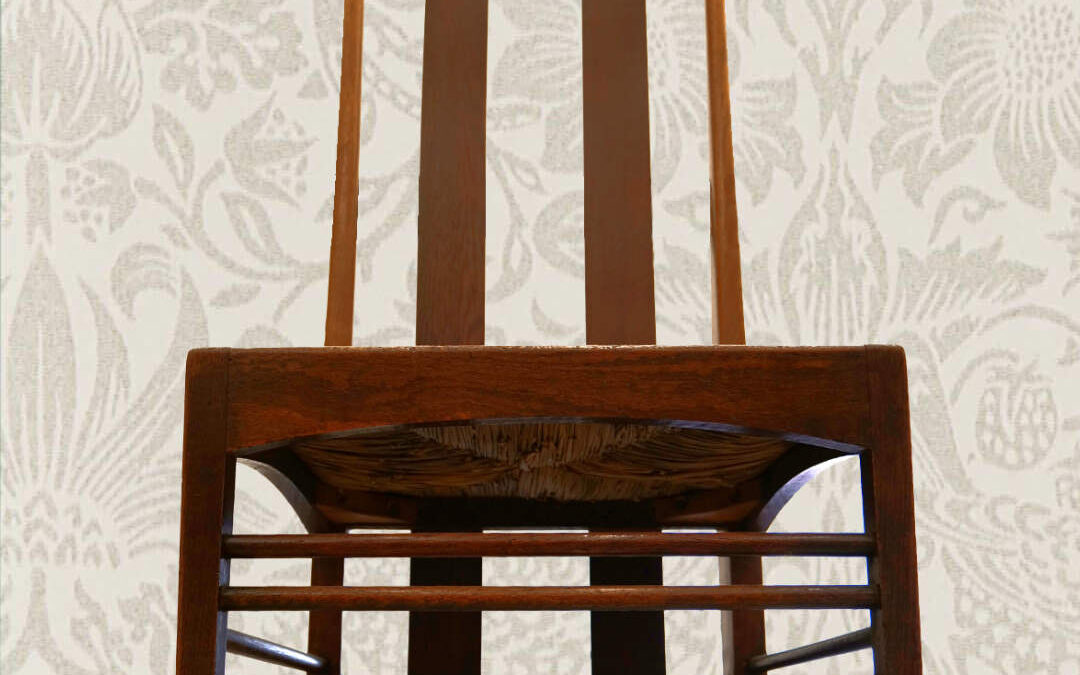
These stencil motifs appear not only on the walls and built-in furniture but also on the chairs themselves. At the table, only two high-backed armchairs are depicted—later known as the Art Lovers Carver Chairs—whose slender, tapering backrests run uninterrupted from top to bottom. These chairs, like many other pieces of furniture designed for this house, remained purely conceptual works on paper for many decades.
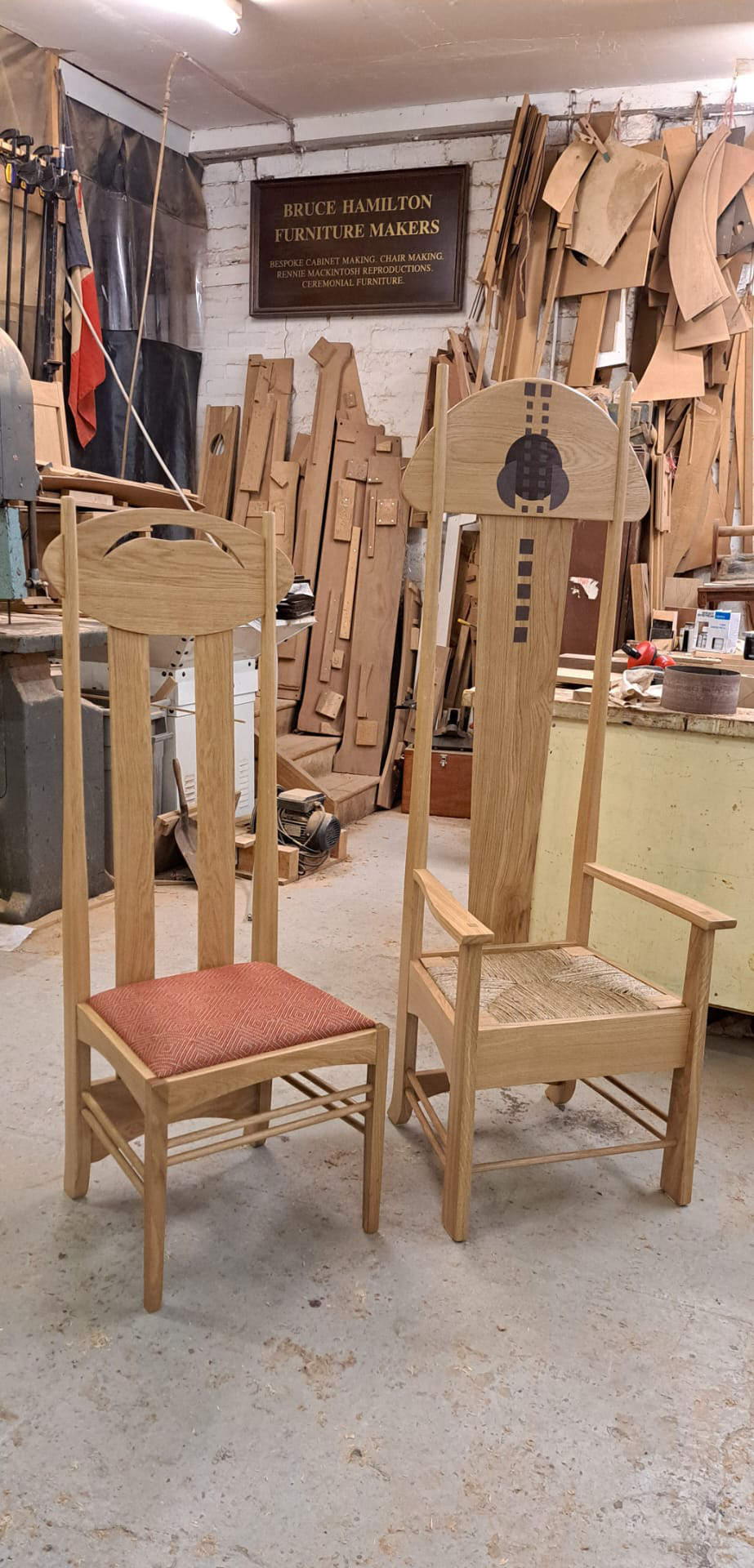
Only more than eighty years later did Mackintosh’s vision begin to materialize. In 1989, an initiative was launched in Glasgow to build the House for an Art Lover according to the original designs. The realization was complex and protracted, and in 1995 Bruce Hamilton Furniture Makers were commissioned to produce the dining room furniture.
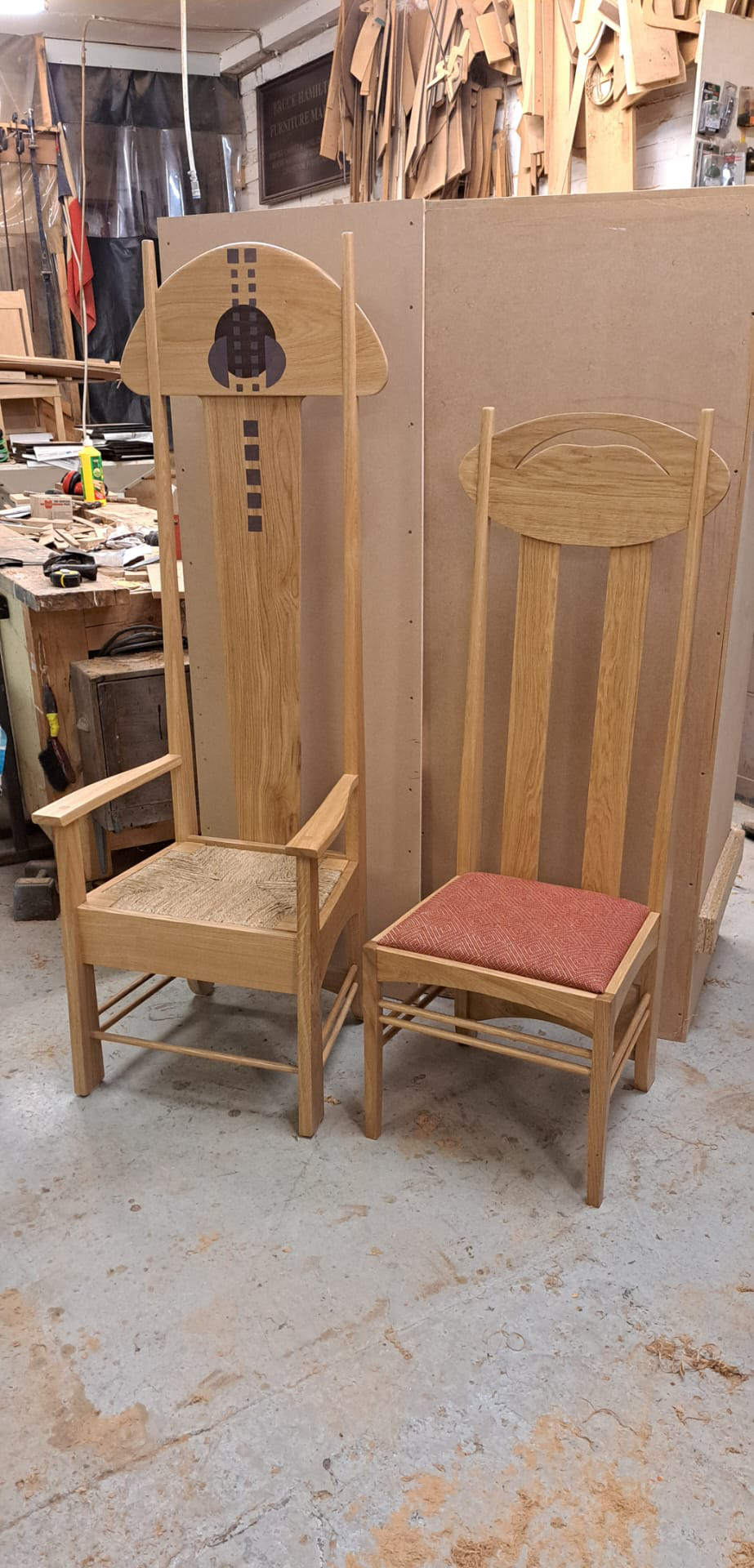
Working with only limited surviving information from the Mackintosh portfolio and in close consultation with Mackintosh scholars, Bruce Hamilton produced full-scale workshop drawings for the dining room suite—his interpretation of Mackintosh’s watercolours.
The pieces of furniture were made as original Mackintosh furniture, even though they were produced sixty-seven years after his death. To this day, Bruce Hamilton continues to work using the same templates and jigs.
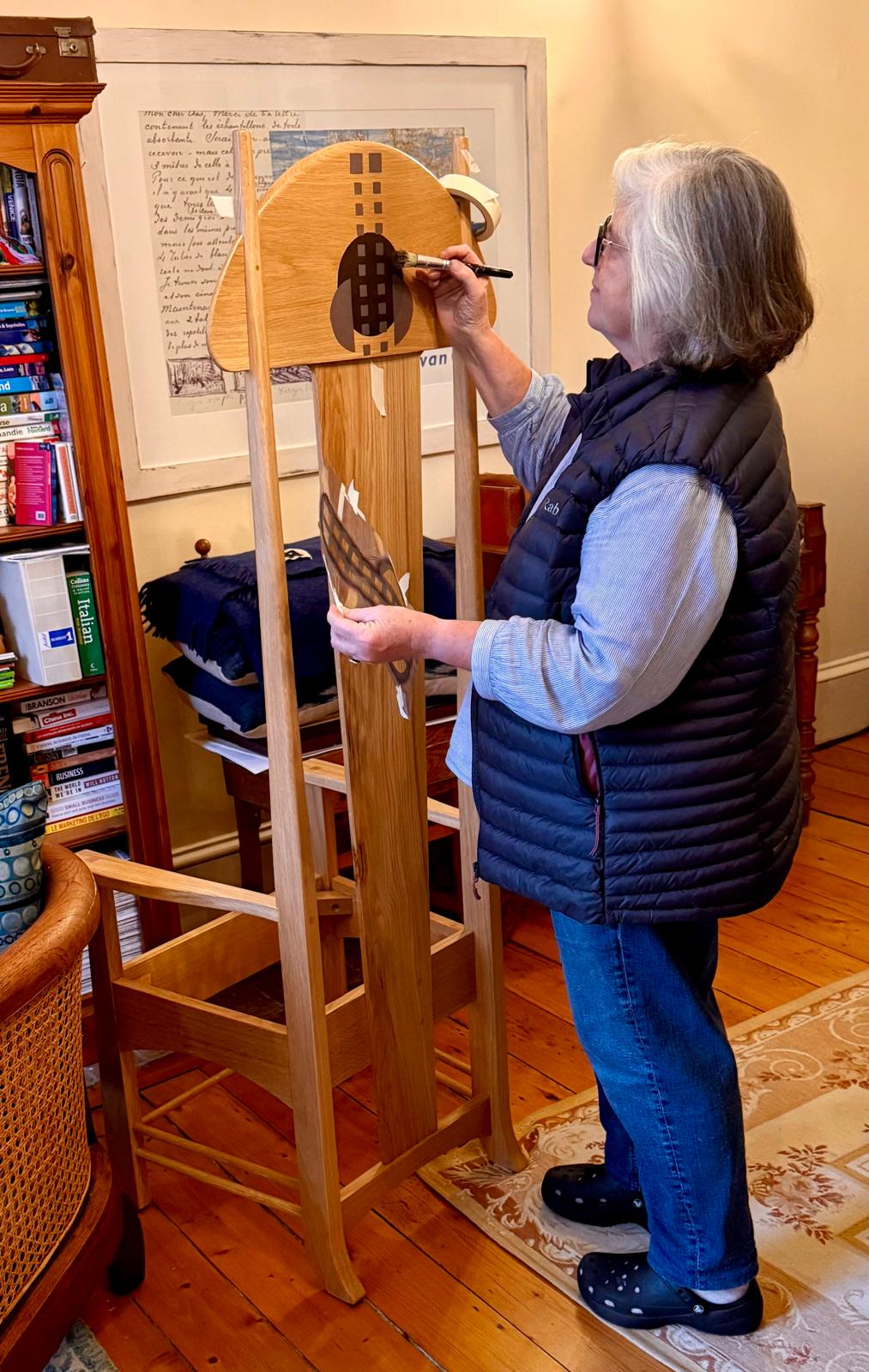
The decorative stencil work on the chair backs is carried out by Elisabeth Viguie Culshaw of the Lansdowne House of Stencils, who continues this demanding technique with great sensitivity.
As the history of its creation demonstrates, the Art Lovers Carver Arm Chair occupies an exceptional position. Since Charles Rennie Mackintosh never built this chair himself, it becomes—through this execution—an original in its own right: not a historical object from around 1900, but a late, precise, and respectful realization of an idea that was far ahead of its time.
The Art Lovers Carver Arm Chair thus stands as an exemplar of Mackintosh’s impact on the Vienna Secession, his influence on European Modernism, and the enduring power of designs that can transcend decades.
It tells a story of vision, of cultural exchange, of craftsmanship at the highest level—and of the fact that some ideas simply need to wait for their time.









Neueste Kommentare